Serengeti wildlife at a glance
The Serengeti National Park covers 1,476,300 hectares, about 14,763 square kilometres, and has been a World Heritage Site since 1981. It is part of a larger ecosystem, and the herds move across its borders into Kenya. Big cats, elephants and great herds share the same plains, woodland and river forests.
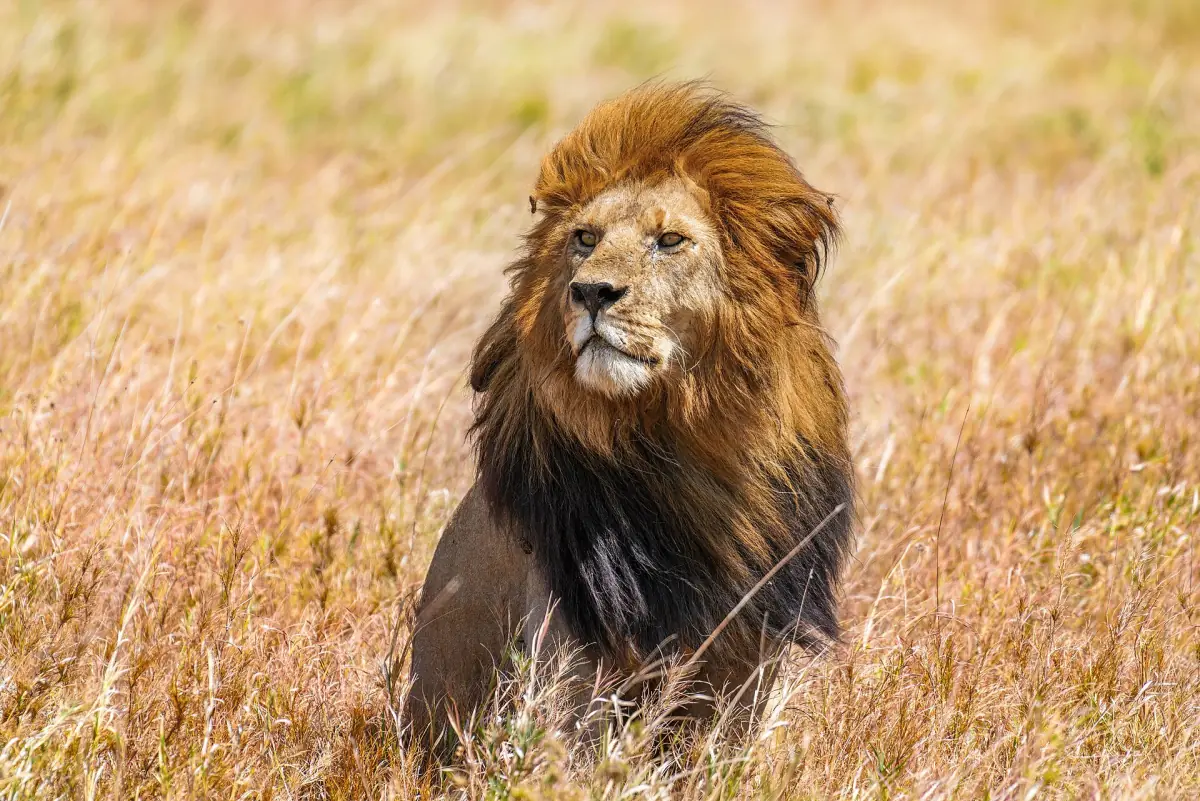
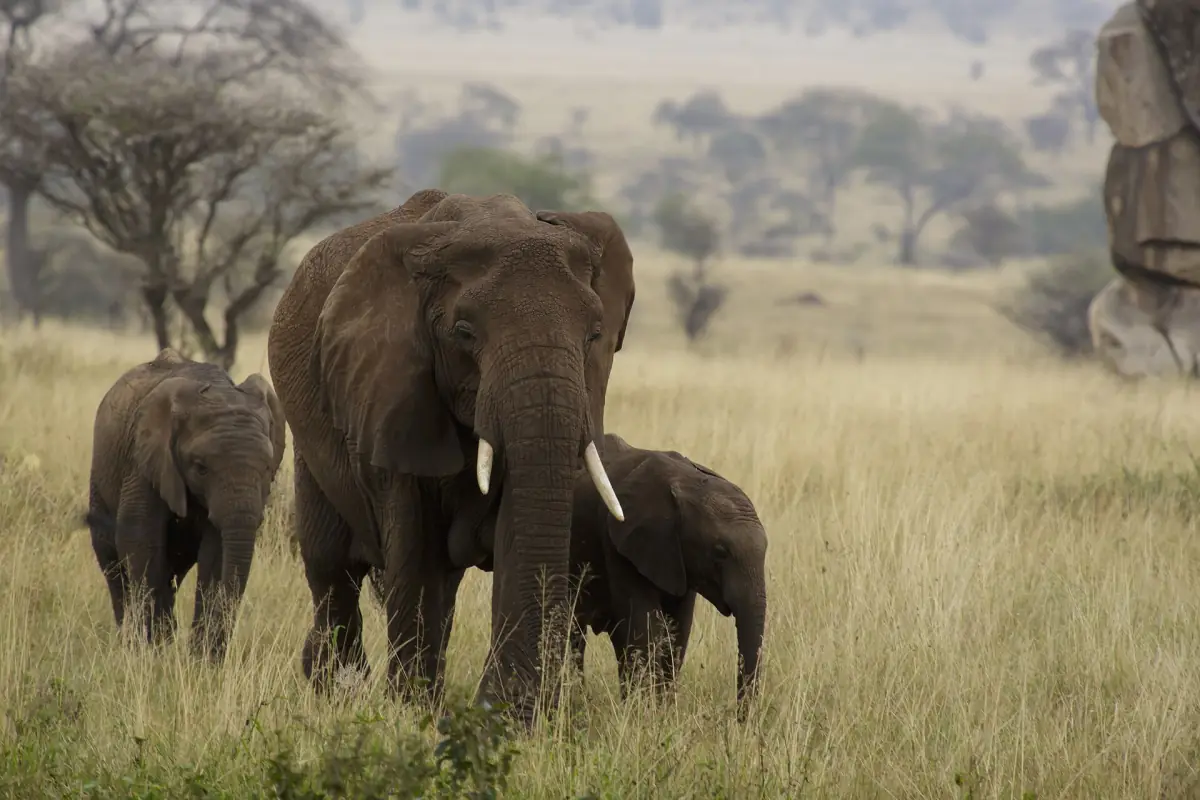
The Big Five are all present in the park: lion, leopard, elephant, buffalo and rhino. Cheetahs live in the park as well. Being present is not the same as being seen. No guide can promise a sighting on a given day, and this page does not either.
This is an independent guide to the animals, not a source of sighting reports. Use it to decide where and when to look, then ask your guide what the recent days have shown.
The Big Five in the Serengeti
All five live in the park. Their chances of being seen differ a lot.
Lion, leopard, elephant, buffalo
All four are present in the park. Which of them you meet depends on the area, the season and luck.
Rhino
The park holds black rhino. They are hard to find, so a rhino sighting is the one to treat as a bonus.
No guarantees
Belonging to the Big Five says nothing about how likely a sighting is. A promise to see all five in one day cannot be made.
Ask your operator whether rhino viewing around Moru is available on your dates and what it costs.
Serengeti wildlife safaris
Guided game drives in the Serengeti, from group trips to private safaris. Compare what each tour includes before you book.
Cheetahs, herds and the plains animals
The open plains are the setting for the animals most visitors come for.
Cheetahs
Cheetahs live in the park. Ask your guide where cheetahs were seen in recent days, and in which part of the park.
Wildebeest and zebra
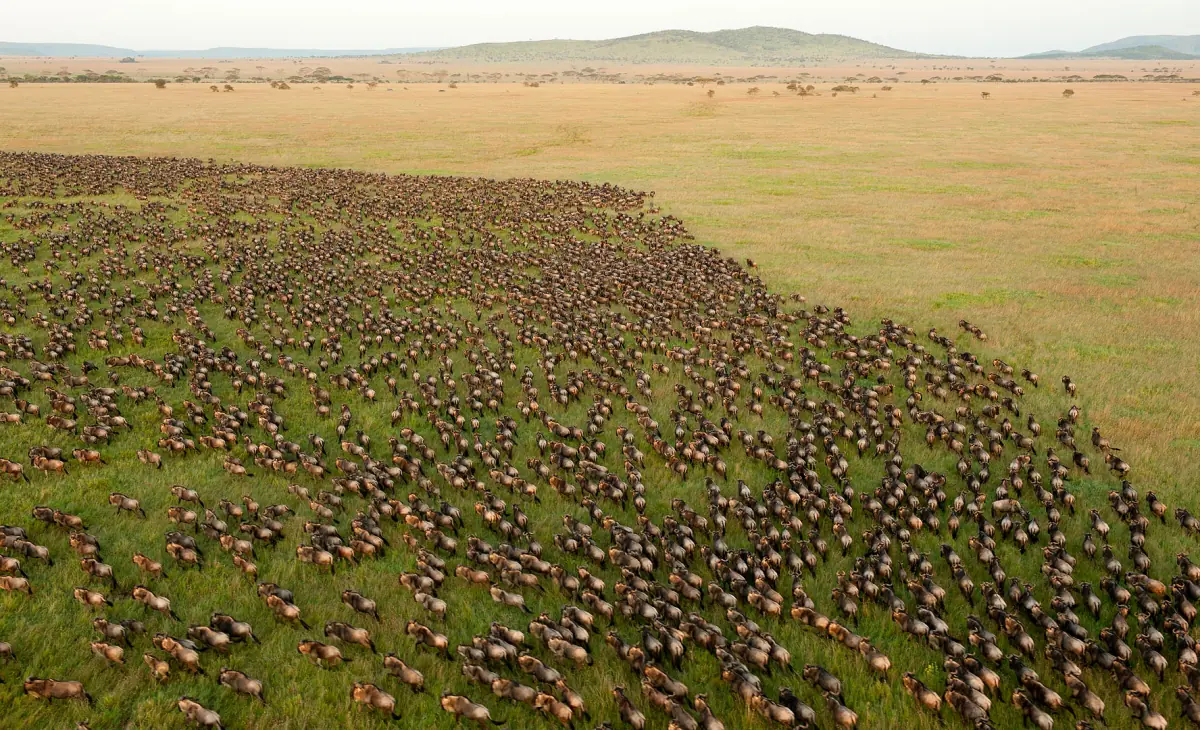
Estimates of the wildebeest herd run from more than 1.5 million to about 2 million animals, with hundreds of thousands of zebras and gazelles moving alongside them. The animals follow fresh grass and water, so their position changes with the season.
The great migration →Predators and calving
On the southern plains, predator activity is higher during the calving season. That raises the chance of seeing hunting behaviour, but it cannot be promised for any day.
Calving season →Where to look by region
Four travel areas, each with its own season.
Centre: Seronera
The central area around Seronera sits on the route the herds take when they move north, usually around April and May.
North: Kogatende and Lamai
The far north is the area for herds near the Mara River, typically from July to October. Crossings happen on some days and not on others.
River crossings →West: Kirawira and Grumeti
The Western Corridor, with the Grumeti River, is where the herds gather around June and July. The Grumeti is a different river stretch from the Mara.
South: Kusini and Ndutu
The southern short-grass plains hold the herds in January and February. Ndutu itself lies in the Ngorongoro Conservation Area, so its lodges are charged separately from the national park. For that area, see the Ngorongoro wildlife guide.
Months are typical patterns, not a timetable. Weather can shift the herds by weeks.
Rules for watching wildlife
These rules protect the animals and you.
Stay in the vehicle
Stay in your vehicle unless your guide allows you to get out. Leave the tracks only with express permission.
Do not feed or disturb
Do not feed or disturb animals. Keep noise down, so that animals and other guests are not disturbed.
Drones
Drones are restricted in the park and need special permits. Ask your operator before you pack one.
Distance
Ask your guide about the rules at each sighting, and follow their instructions on the spot.
More Serengeti planning
Pages that go with the animals.
Serengeti animals: frequently asked questions
Can I see the Big Five in the Serengeti?
All five species live in the park. A sighting of all five on one day cannot be promised. Rhinos are the hardest to find.
Where can I see cheetahs?
Cheetahs live in the park. Ask your guide where they were seen in recent days.
How many wildebeest are in the Serengeti?
Estimates run from more than 1.5 million to about 2 million. Hundreds of thousands of zebras and gazelles move with them.
Is it safe to leave the vehicle?
Stay in the vehicle unless your guide allows you to get out. Leave the tracks only with express permission.
Can I fly a drone?
Drones are restricted in the park and need special permits. Ask your operator before you travel.
When are the herds in which part of the park?
Typical patterns: the south in January and February, the centre around April and May, the west around June and July, the north from July to October, and back south from November. Weather can shift this by weeks.
Are there rhinos in the Serengeti?
Yes, black rhino live in the park. They are hard to find, so do not plan your trip around seeing one.
Is the Ngorongoro Crater part of the Serengeti?
No. The crater belongs to the Ngorongoro Conservation Area. Our sister guide to the Ngorongoro Crater covers it.