The Great Migration in brief
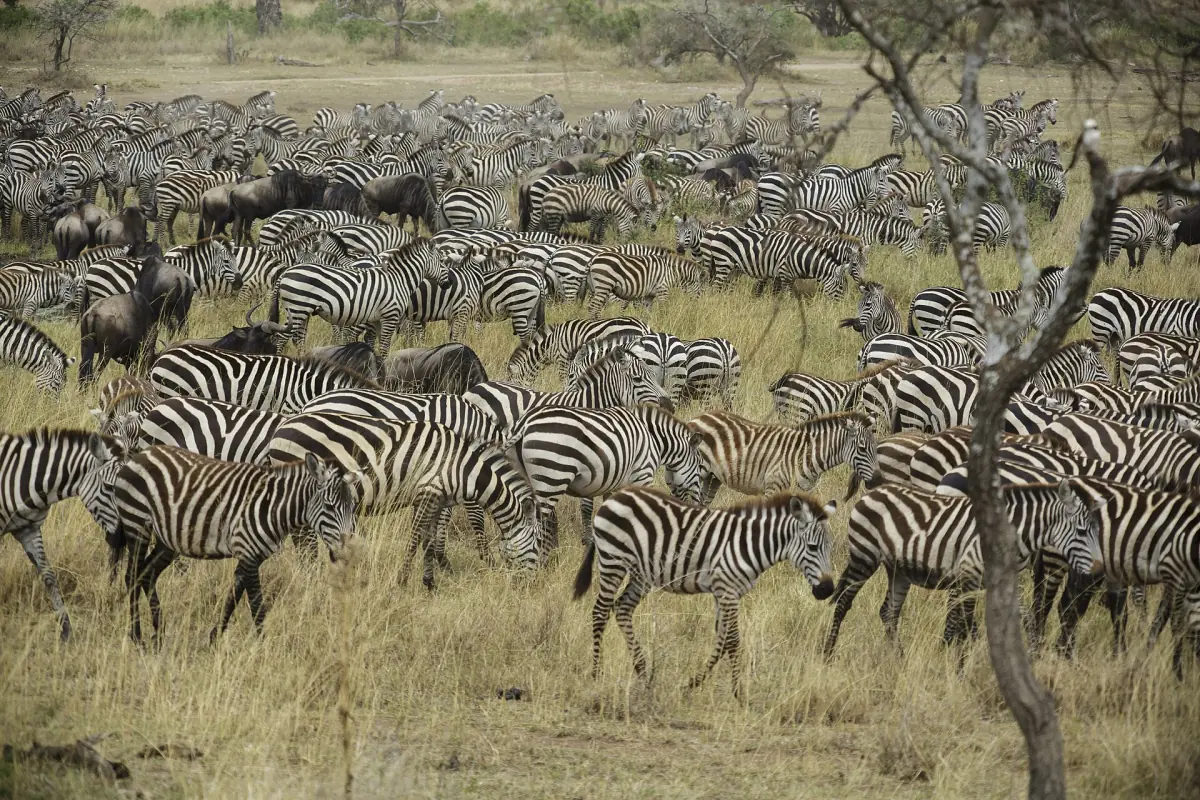
The Great Migration is the movement of huge herds of wildebeest, with zebras and gazelles, through the Serengeti ecosystem. The animals look for fresh grass and water, so they move in a rough circle through the year: south, then west, then north, then back south. The route is not limited to the national park. It reaches into Kenya.
There is no exact count. Estimates for wildebeest run from more than 1.5 million to about 2 million, with hundreds of thousands of zebras and gazelles besides. The pattern is the same every year, but the timing is not. Rain moves the herds, and a calendar of typical months is not a schedule. Nobody can tell you where a given herd will stand on a given day.
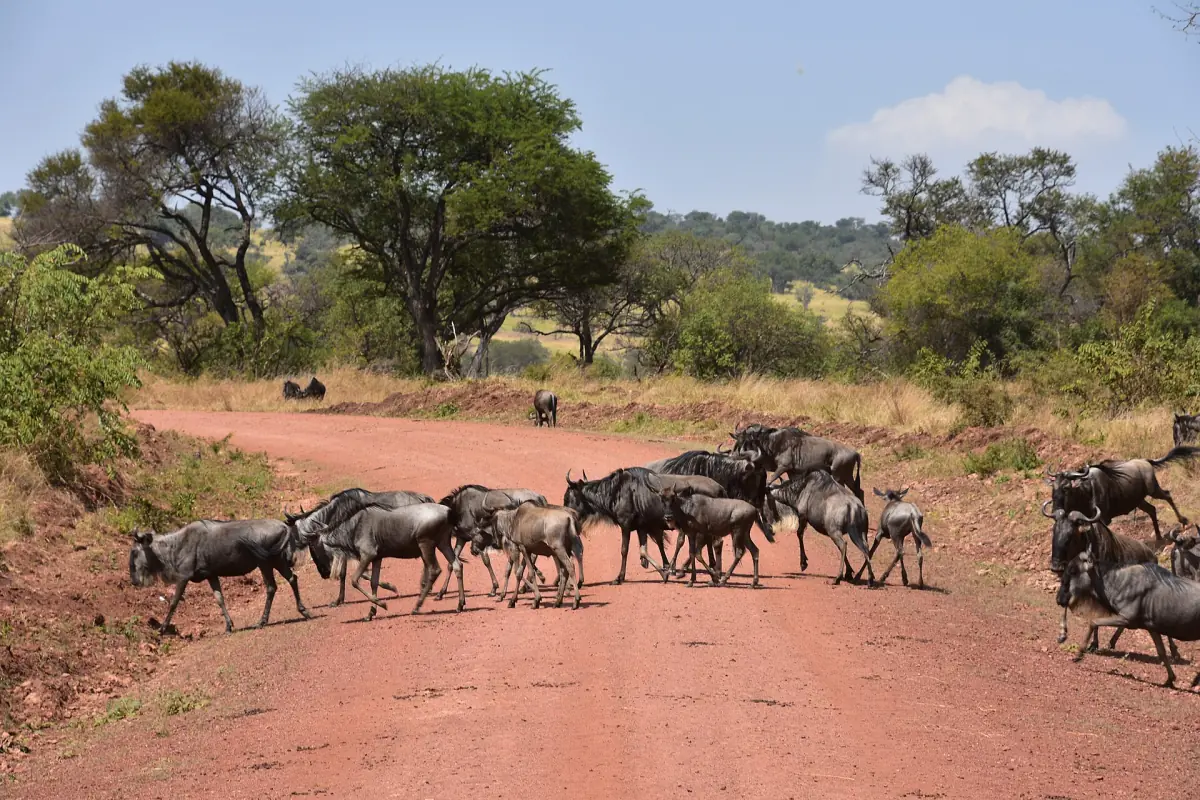
Month by month
Typical areas, not a forecast for a particular day.
| Month | Typical area or movement |
|---|---|
| January | Short-grass plains in the south |
| February | Southern short-grass plains |
| March | South, Loliondo and the Ngorongoro Conservation Area, spread over a wider area |
| April | Moving north through Moru and Seronera |
| May | From Seronera toward the Western Corridor |
| June | Gathering in the Western Corridor and Grumeti |
| July | Grumeti and the Grumeti Reserve, with early arrivals in the north possible |
| August | Further into the far northwest |
| September | Northern Serengeti and the Maasai Mara |
| October | Far north and the Mara |
| November | South through Loliondo and the eastern fringes |
| December | Return to the southern short-grass plains |
Some descriptions place the first herds in the north as early as late June and back in the south from late December. Treat the two descriptions as different typical years, not as one fixed timetable.
Our picks: migration safaris
Multi-day trips planned around the herds, whose position can never be promised.
Hand-picked tours, booked through GetYourGuide. Prices are indicative starting prices in US dollars (as of October 2026). Tap a tour for live availability and the current price in your currency.
6-day Serengeti safari to the Mara River
Three nights in a mobile tented camp and two in lodges, park entry, airport transfers and a Land Cruiser are included. The balloon flight is optional and not in the from price.
Check availability →7-day Serengeti migration safari
Lodge stays, an English-speaking guide, a 4x4, national park fees and airport transfers are included. Flights, tips and the optional balloon flight are extra.
Check availability →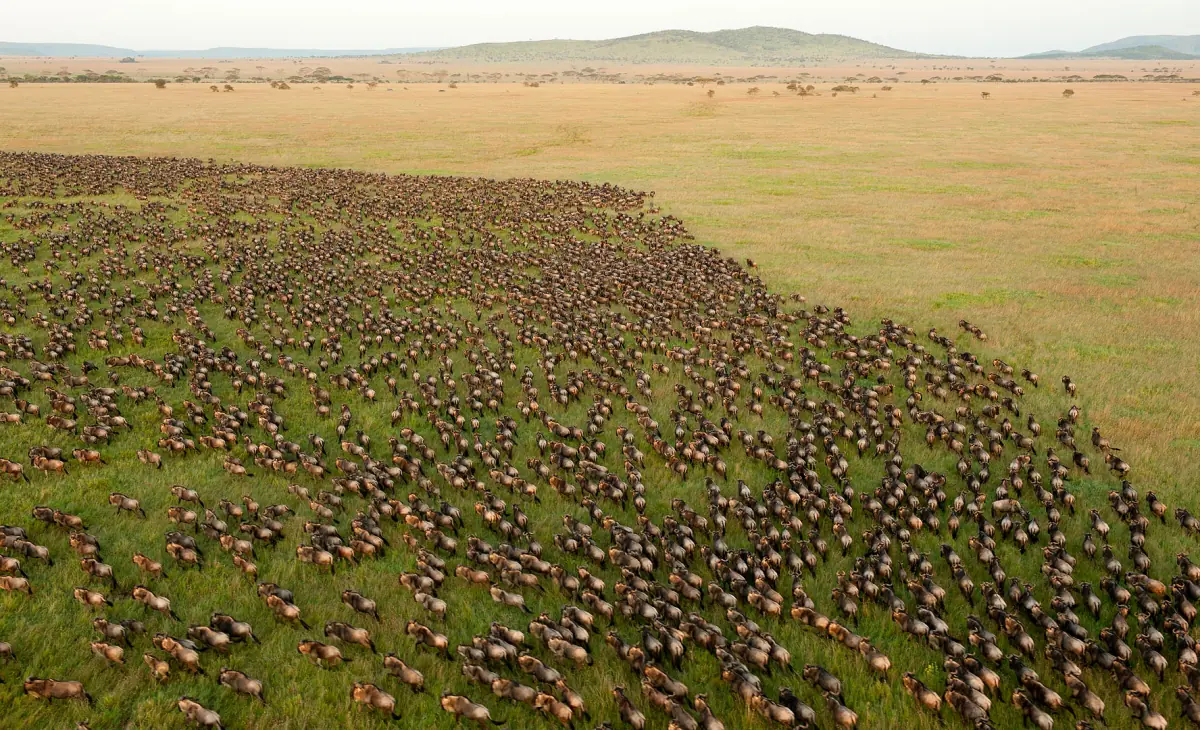
4-day Serengeti safari for the calving season
All entry fees, transport, accommodation and meals as per the itinerary are included, with a driver-guide. Where the herds are depends on the season and cannot be promised.
Check availability →Great Migration safaris and tours
Safaris and tours in the Serengeti with live prices and availability.
Why the herds move
Grass and water decide, and the weather decides when.
Wildebeest follow the rains. After the short rains the southern plains turn green and the herds return to them. As the dry months arrive the grass thins, and the herds move north and west toward water. These months depend on the weather. If the rains come late or early, the herds arrive late or early too.
Part of the route lies outside the park. The southern plains continue into the Ngorongoro Conservation Area around Ndutu, and in September and October the herds move between the northern Serengeti and the Maasai Mara in Kenya. Do not take the area of the whole migration for the area of the park. You can read more about the south on the Ndutu page.

Planning around the herds
Pick the region first, then the month.
South, January to March
Short-grass plains and the calving season. A lodge in the area can matter more than the exact date. Check whether your camp lies inside the national park or in the conservation area next to it.
Calving season →West, June and July
The Grumeti river area, with the Western Corridor around it. This is a different river from the Mara, with its own timing.
River crossings →North, July to October
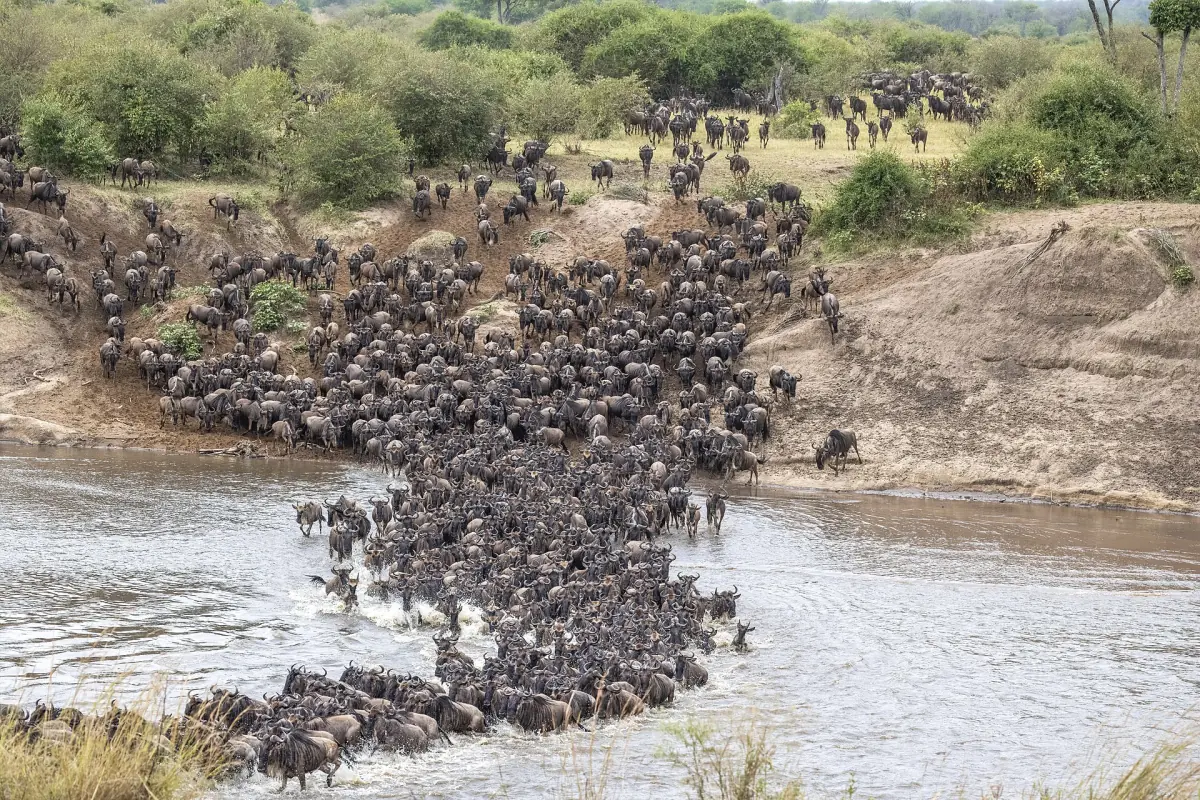
Mara River crossings are best known from this stretch of the route. They are not daily, and nobody can guarantee a crossing during your stay.
Mara River crossings →Allow several days in the region you choose, not a single morning. The park is open all year, but some camps close in parts of the year, so check opening months on the lodges page. For rains and dry months, see best time to visit.
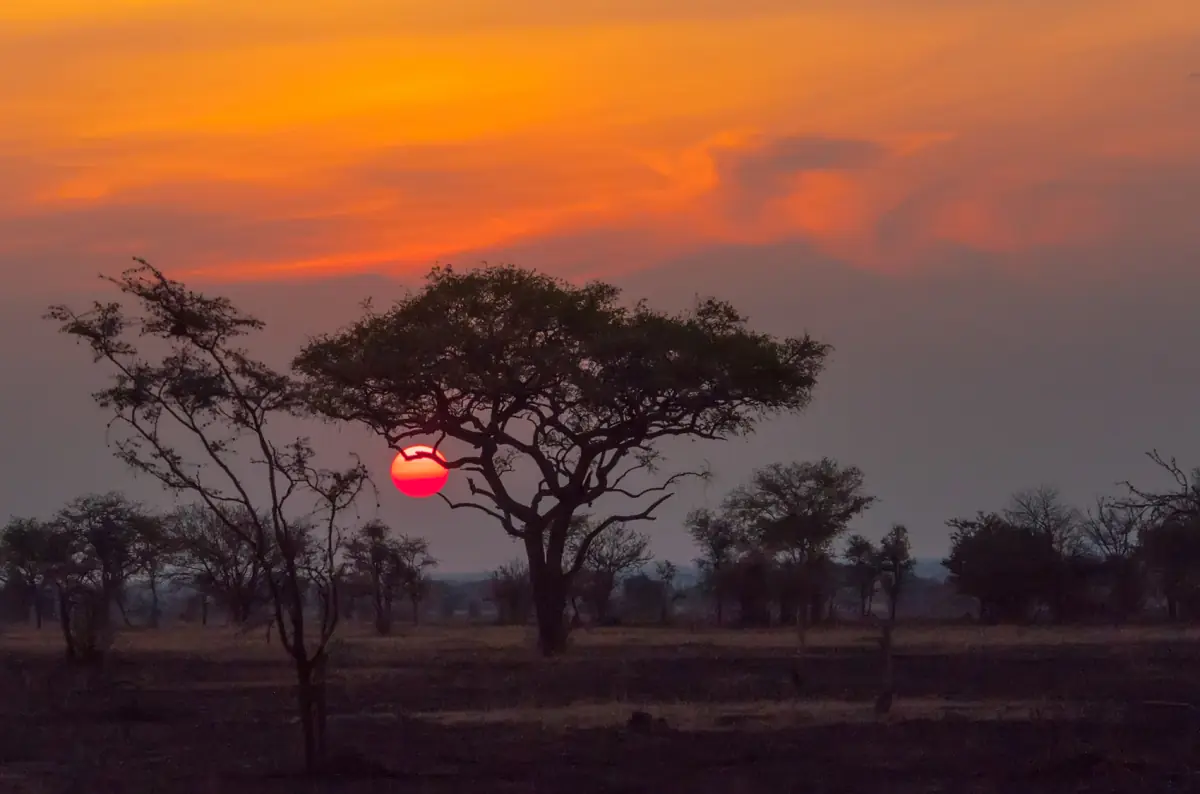
Choosing a base for your trip
Each travel area has its own season and its own character.
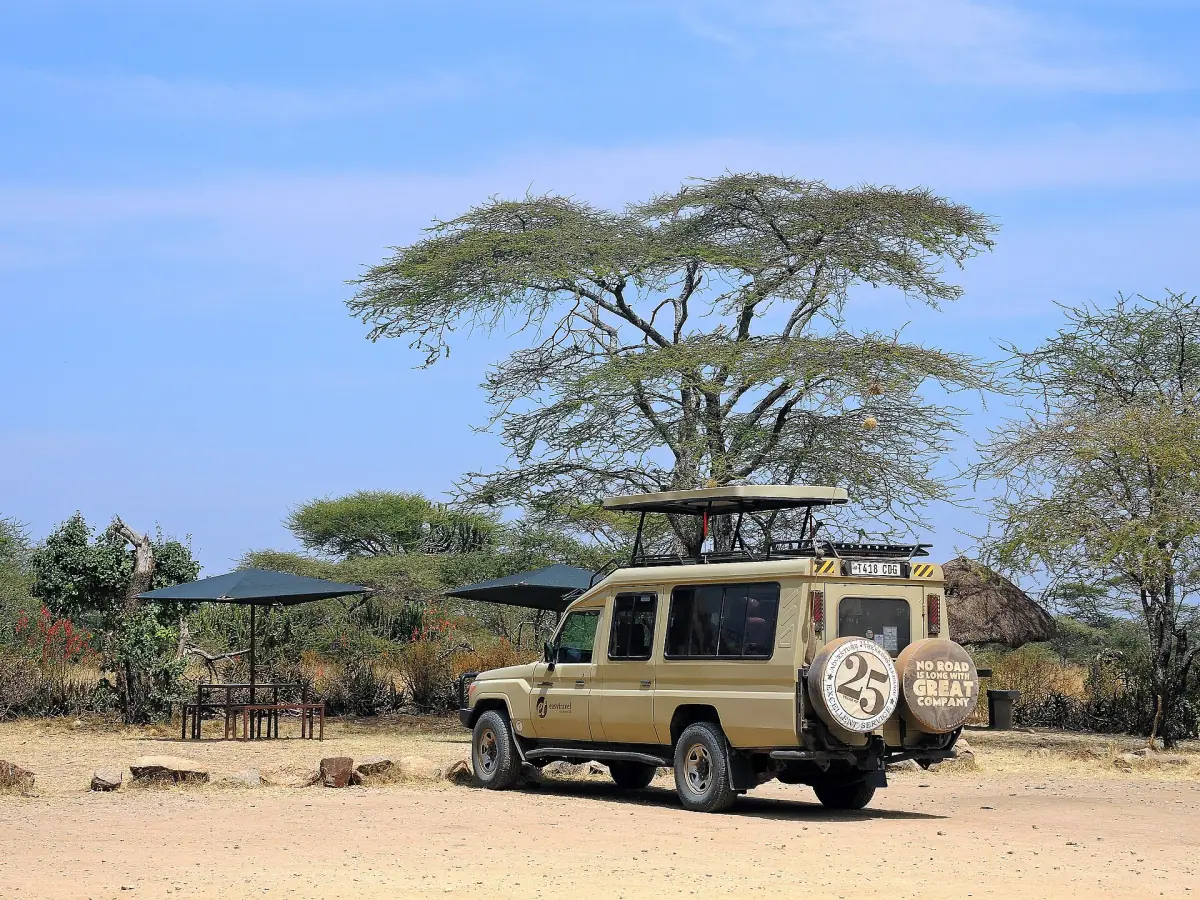
The park is usually described in four travel areas: Seronera in the center, Kogatende and Lamai in the north, Kirawira and Grumeti in the west, and Kusini and the plains around Ndutu in the south. These are travel areas, not administrative districts. Match the area to the month you travel, and keep in mind that a camp in one area is far from the next. A long drive between areas eats into game drive time.
Residents such as lions, elephants and giraffes live in the park all year, so a trip outside the main herd season is still a safari. The wildlife page covers them, and the safari page compares ways to travel.
Great Migration: frequently asked questions
When is the Great Migration in the Serengeti?
The herds move all year, so there is always a migration somewhere. Typical months are January to March in the south, June and July in the west and July to October in the north. These are typical patterns that shift with the weather.
How many animals take part?
Estimates for wildebeest run from more than 1.5 million to about 2 million, with hundreds of thousands of zebras and gazelles. There is no exact figure.
Is the whole migration inside the national park?
No. The route reaches the Ngorongoro Conservation Area in the south and the Maasai Mara in Kenya in the north. The park area is not the same as the migration area.
Can I be sure to see the herds?
No. The herds follow grass and water, and the weather moves them. A good guide and a few days in the right region raise your chances, but nobody can promise a sighting.
Is the migration the same as the river crossings?
No. Crossings are one part of the migration. The Mara River crossings in the north typically fall between July and October, and the Grumeti river in the west plays a role around June and July.